5. Dynamique de groupe et projet final#
This final module consisted of several sessions dedicated to team building and the collaborative development of the final project. One of its central objectives was to guide us in the art of addressing a specific problem in a rigorous, creative, and effective manner.
My Case#
First, I’d like to point out that I’ve experienced the group dynamics in these classes from a different perspective than the rest of my classmates, so my documentation for this module will be a little different. I’ve participated in all the exercises and found them to be super interesting activities, but I don’t form a group with anyone, and yet I feel like I’m with everyone 😅, it’s complicated.
Like the rest of my classmates, I have to focus on a problem to solve as a final project. Furthermore, as a Cuban student, along with my classmate Alex Manuel Rivera, we have the mission of guiding the others toward specific problems in Cuban society and connecting them with other Cubans who have firsthand knowledge of the problem they chose, so they can help them better understand every detail.
With that clarified, we can continue!
5.1. Group formation and brainstorming on societal issues#
Individually#
For the first session, we were asked to bring an object or draw something that represented a problem. I drew a microscope (like the one in the photo) to represent its importance in so many fields, and specifically in the study of environmental pollution, where it’s necessary to see beyond what our eyes can perceive. But for me, this microscope isn’t just a tool; it’s a symbol of the invisible threat. In Cuba, pollution doesn’t always manifest itself with oil slicks visible from the shore. Often, it’s microscopic: plastic fibers in the seawater, algal blooms, pollutants hidden in fish. My drawing doesn’t focus on the instrument itself, but on what it reveals. The microscope reminds me that true change begins when we learn to see what has been ignored. And for communities with limited resources, making the invisible visible isn’t just a scientific act, but an act of justice.
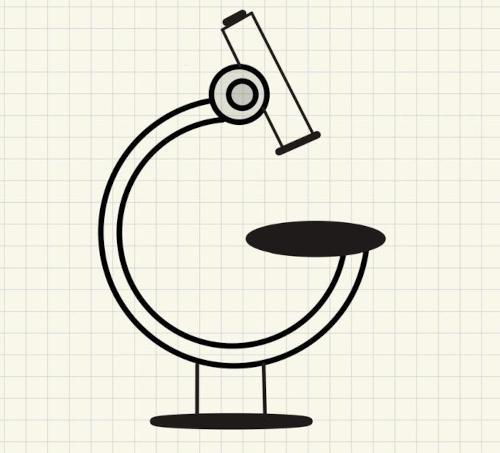
After briefly discussing all the objects, where, interestingly, the study of water pollution through microscopy and imaging was quite popular, my classmates grouped themselves into trios or quartets with the people whose objects caught their attention or were related to them. It was interesting to observe how students from different areas, without having planned it, organically created connections focused on the same cause.
5.2. Group dynamics#
In this session, the objective was to learn how to use tools to improve group functioning. Specifically, we learned how to structure meetings, define and assign roles, use decision-making techniques, communicate effectively, give everyone a voice, and provide feedback.
To do this, we began with a game-like activity where we randomly grouped ourselves to complete the instructions of a Lego set. This game made it easy to understand and achieve the lesson’s objective. In my group, the person with the best prior knowledge of the game immediately explained how it worked to everyone (like a good leader would). Then, tasks (colors) were assigned to each person, and as a team, we carefully followed each instruction until we finished.
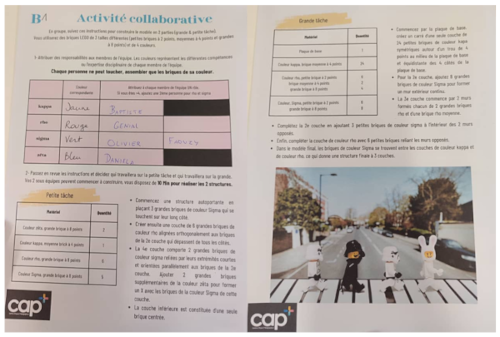
After each group had the experience, we received a dynamic lecture where the different concepts that must be taken into account to work in a group were connected.
This session, along with the others, made it clear that effective communication is the backbone of any team: it’s not enough to simply talk; active listening, asking clear questions, and expressing ideas in an accessible way are essential. The importance of clearly defining roles and tasks was also emphasized, not as fixed labels, but as rotating responsibilities that allow each member to contribute based on their strengths and learn from their areas for growth. A well-distributed role prevents overloading a few and fosters shared responsibility. This led us to reflect on how to properly structure meetings: starting with a brief check-in, reviewing pending tasks, dedicating most of the time to collaborative work, and concluding with clear decisions and new assignments. Even in individual projects, this routine provides rhythm and focus. Decision-making was another key point. It’s not always about voting, but about seeking consensus, listening to everyone equally, and, when necessary, delegating technical decisions to those with more experience in that area. Finally, the value of constructive feedback was highlighted, not as criticism, but as a tool for continuous improvement.
Taken together, these elements are not just “best practices”; they are the invisible infrastructure that sustains collective innovation, especially in frugal projects where resources are limited, but creativity and collaboration abound.
5.2.1. Group Dynamics Tools#
Although my work is individual, I actively incorporated group dynamics tools into my self-management process and my interactions with other teams. Below, I have documented three key tools.
Tool 1: Minimal Agenda for Each Interaction#
Inspired by the principle of “less is more,” this tool stems from the need to structure brief interactions. Use a quick checklist at the start of any interaction or work session (even if it’s just with yourself). This tool ensures you don’t overlook the essentials before getting started.
The checklist includes four questions: - [] What specific problem do I want to solve today? - [] What resources do I already have ready (code, parts, data)? - [] How much time do I allow myself for this task? - [] Who or what could help me?
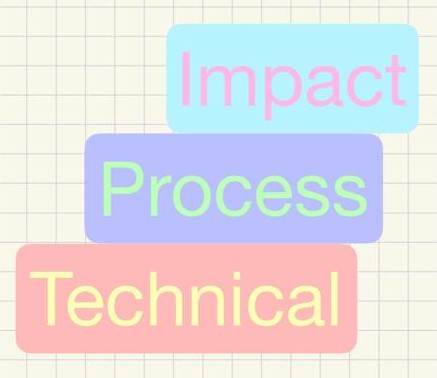
Tool 2: Leveled Feedback “Technical / Process / Impact”#
Instead of asking for open-ended feedback (which often generates vague responses like “it’s okay”), it’s more productive to use a tool that structures feedback into three distinct levels, helping to separate subjective opinions from useful observations.
-
Technical level: Does it work? Is it stable? Are there any bugs?
-
Process level: Is it replicable? Is it clear how to assemble it?
-
Impact level: Does it solve the real problem? Is it accessible?
Tool 3: Rotating Personal Roles#
Since I mostly work alone, I run the risk of falling into a one-track mindset (for example, only designing or only documenting). To avoid this, I use a weekly role rotation system. For example:
- Research week: I review documentation from the projects I’m basing my work on.
- Building week: I design and assemble the different components.
- Narrative week: I document and take photos.
Soon, on the final project page, I will be answering all the questions that were addressed in this module, using these tools and everything learned during the course.